what to eat to fulfill my daily nutritionm
What I Learned From Tracking My Food Intake Every Day
I idea keeping a food diary was merely for weight loss, but what I learned in a week extended beyond counting calories.

October 16, 2018

Do you ever stop to think about what you're eating? I mean really think about what you're eating: Why did you cull that chicken dish? Did y'all only gild the first menu item that sounded good?
Information technology's easy to mindlessly eat every meal. We have so much else going on in our lives that spending time understanding how much food or which foods we consume at any given moment seems like an actress responsibility we just don't need. I'll acknowledge that even as an editor for a nutrition website, I sometimes succumb to the "nutrient is fuel" motto and just end up eating whatever I tin get my easily on the quickest.
Besides the tediousness of this additional evaluation, I reckoned that because I'grand a relatively good for you person of a normal weight, I didn't really need to pay attention to what I was eating. But that's non the all-time fashion to get about your diet.
When one of the classes I was taking for the Cornell University Healthy Eating and Living Nutrition Certificate asked me to track my nutrient intake for a calendar week, information technology taught me lessons I never knew I could learn.
So, I set out to track my food intake every day for a week—calories, fat, and all. Keep reading to come across what I learned, and if you're considering doing the same, follow up this read with these 10 Tips for Keeping a Food Journal for Weight Loss.

I've e'er heeded the advice to melt more at home, eat out rarely, and go on intake of processed, packaged foods to a minimum — but male child is that ho-hum to track! I used how much butter here? And what almost the amount of olive oil I drizzled on those veggies? Was it ii tablespoons or three? My food tracking life was peculiarly harder considering I'm someone who makes upwards recipes from scratch and doesn't measure ingredients.
Consume This! Tip: Tape as you melt so y'all don't have to spend more time afterward in the day to effigy out what you had made earlier. Plus, you'll exist more than authentic this style.

The silvery lining hither is that I actually started to keep a record of my favorite meals and how I make them. This became a useful tool in hereafter weeks when I was searching for inspiration for what to cook for dinner.
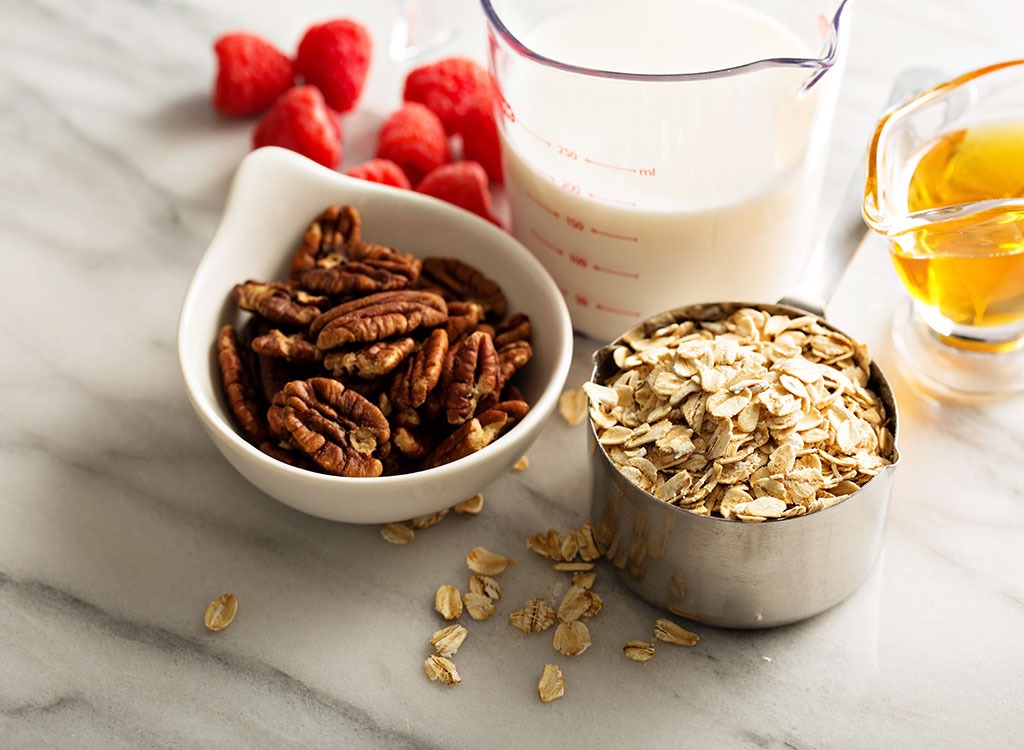
To make tracking calories simpler, I found myself sticking to serving sizes instead of eating as much as I wanted an item. This helped me avert computing fractions (I like math, but this is dull), and it also helped me control portions.

The peachy thing about tracking your food intake is that you have to hold yourself accountable for every food you put in your body. Plus, you have to ask yourself the question: Is eating this nutrient worth the try of tracking?
Do I actually desire to track a scattering of Peanut M&M'south I could catch from my building's front desk? How many did I actually have? Should I stop off that bag of brittle sitting half-eaten on my desk-bound? After a couple days of tracking my food, I realized that most of the foods I was questioning whether to swallow were ofttimes unhealthy. Ultimately, I decided they weren't doing my torso whatever favors and I cut them out of my diet.
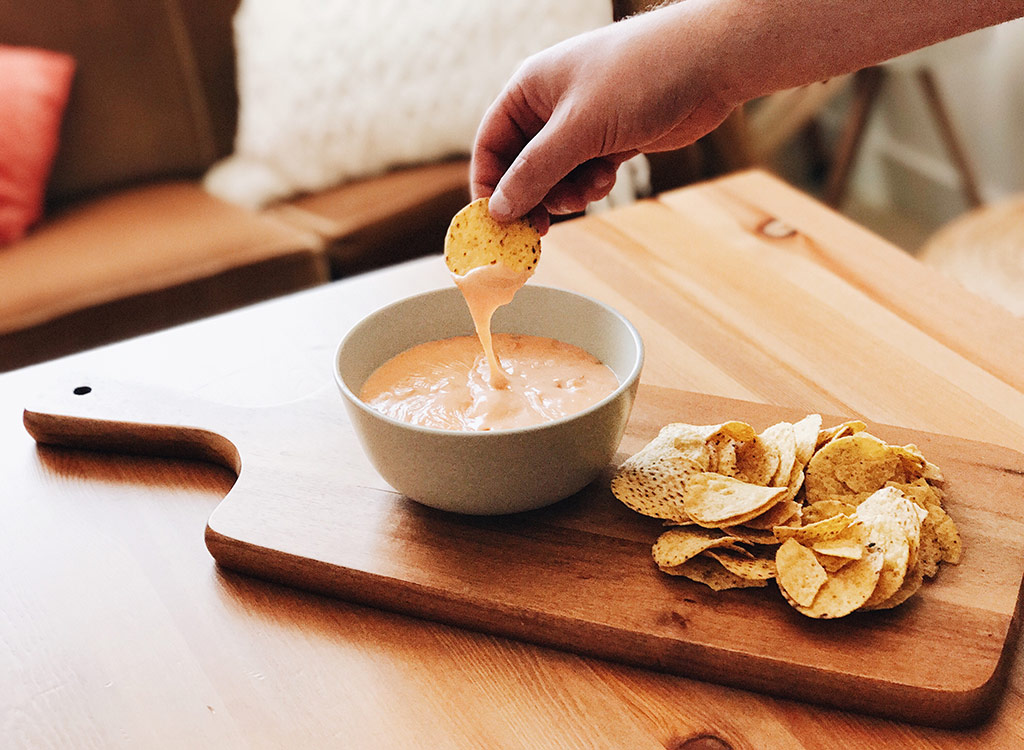
Until I tracked my food during this experiment, I never realized how many opportunities I take to eat nutrient every twenty-four hour period. And about of the time, I'll casually eat it without thinking twice. Why? Only considering it's there—not considering I'1000 hungry. This experiment taught me to exist more mindful about listening to my body to dictate when it was time to eat rather than just seeing nutrient and eating it. If yous feel yourself snacking constantly during the day, see if it'southward due to one of these xxx Reasons Why Y'all're Always Hungry.

Keeping a nutrient diary is a good thought to draw your attention to what you're eating, just it's not an easy feat when you're trying to faithfully record your daily intake of nutrient. In order to accurately track everything you eat, you really have to take the time. How much chicken did you take off that plate? What was the size of it? Did y'all add a little extra olive oil on your salad afterward dressing it with those 2 tablespoons of dressing? Did you grab a handful of jelly beans at the forepart desk before going back to piece of work?
Mind you, my assignment was to record the number of calories I ate over the form of the day (which requires a lot of adding), so it was much more than in-depth than a food diary has to be. Only still—it was a lot of work. Even a 2008 study published in the journal Contemporary Clinical Trials found that many individuals had difficulty keeping faithful records.
Eat This! Tip: You don't have to keep a meticulous record for a food diary to be successful. "Keeping a food diary doesn't accept to exist a formal thing," said Keith Bachman, MD, a Kaiser Permanente Weight Management Initiative member in a press release. Kaiser Permanente researchers discovered that keeping a food diary tin can double a person'due south weight loss over the course of two and a half years. "Just the act of scribbling downwardly what you swallow on a Mail-Information technology note, sending yourself e-mails tallying each repast, or sending yourself a text message will suffice," explains Dr. Bachman. "Information technology's the procedure of reflecting on what you consume that helps united states of america become aware of our habits, and hopefully change our behavior."
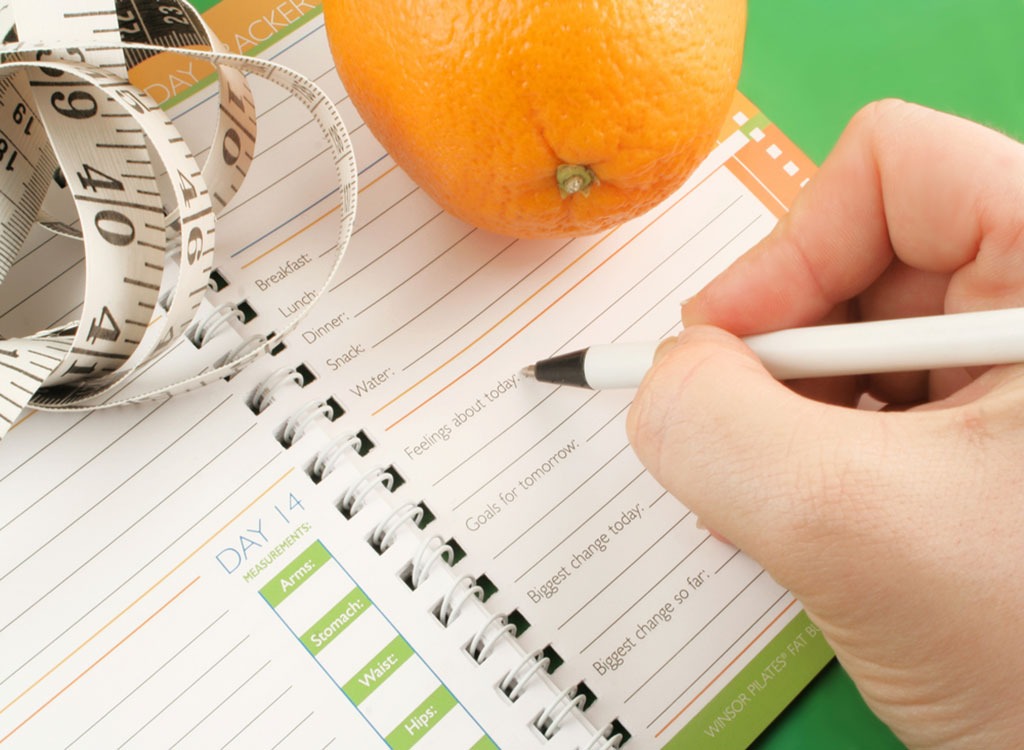
This experiment really helped me to reflect on the foods I was using to fuel my body. While I didn't wait to make any changes to my diet going into the week, I ultimately found countless means I could amend my eating habits. While I have no want to meticulously rails calories, I take continued to jot downwards what I eat every twenty-four hour period as a mindfulness do (and and so I can keep track of my favorite dinner ideas). Tracking your food intake is one of the first steps dietitians will have you do when you offset working together. Consider trying it on your own, and and then see how keeping a food record was able to play a role in How a Nutritionist Solved My Mystery Bloating.
Olivia Tarantino is a senior editor of Swallow This, Not That!, specializing in nutrition, health, and nutrient product coverage. Read more than
Source: https://www.eatthis.com/tracking-food-intake-food-diary/
0 Response to "what to eat to fulfill my daily nutritionm"
Postar um comentário